
Selling and letting
Selling in a market where everyone already knows everyone
Monaco is two square kilometres. The buyer for your apartment is very likely already known to someone here — which is why how quietly and how well an instruction is handled matters more than how widely it is advertised.
From instruction to signature
How it goes
Six things happen between an instruction and a signature, and only one of them is a photograph on a website. This is the order they come in, and who does what.
We come and see it
In person, not from a form. We will tell you what we think it is worth and why, including the things that will hold the price down — a seller who hears only good news is being sold to.
We agree how visible you want to be
Some instructions are published; some are shown to a handful of people and never appear anywhere.
We prepare it properly before anyone sees it
A considered asking price, photography, a floor plan and a description in three languages. Nothing goes out until all of it exists: the first week on the market is the week a property is looked at hardest.
We conduct the viewings ourselves
By someone who has been inside the building and can answer what the service charge covers and which floors get the afternoon light. Never a key-holder sent from an office.
We tell you what is actually happening
In writing after each viewing, including when it is not going well. If the price is wrong, you will hear it from us early rather than after three quiet months.
We see it through to the signature
An offer is the middle of this, not the end of it. We put it to you with what we know about the buyer behind it, get the terms agreed in writing, then keep the file moving — the building’s paperwork, the syndic, the questions from the other side — until it is signed at the notary.
Presentation
What a buyer is shown, and how it is made
A property is presented once. Whatever it looks like in its first fortnight is what the people who matter will remember it looking like, and they do not come back for a second opinion because the photographs improved.
Photographs taken for the room, not for the file
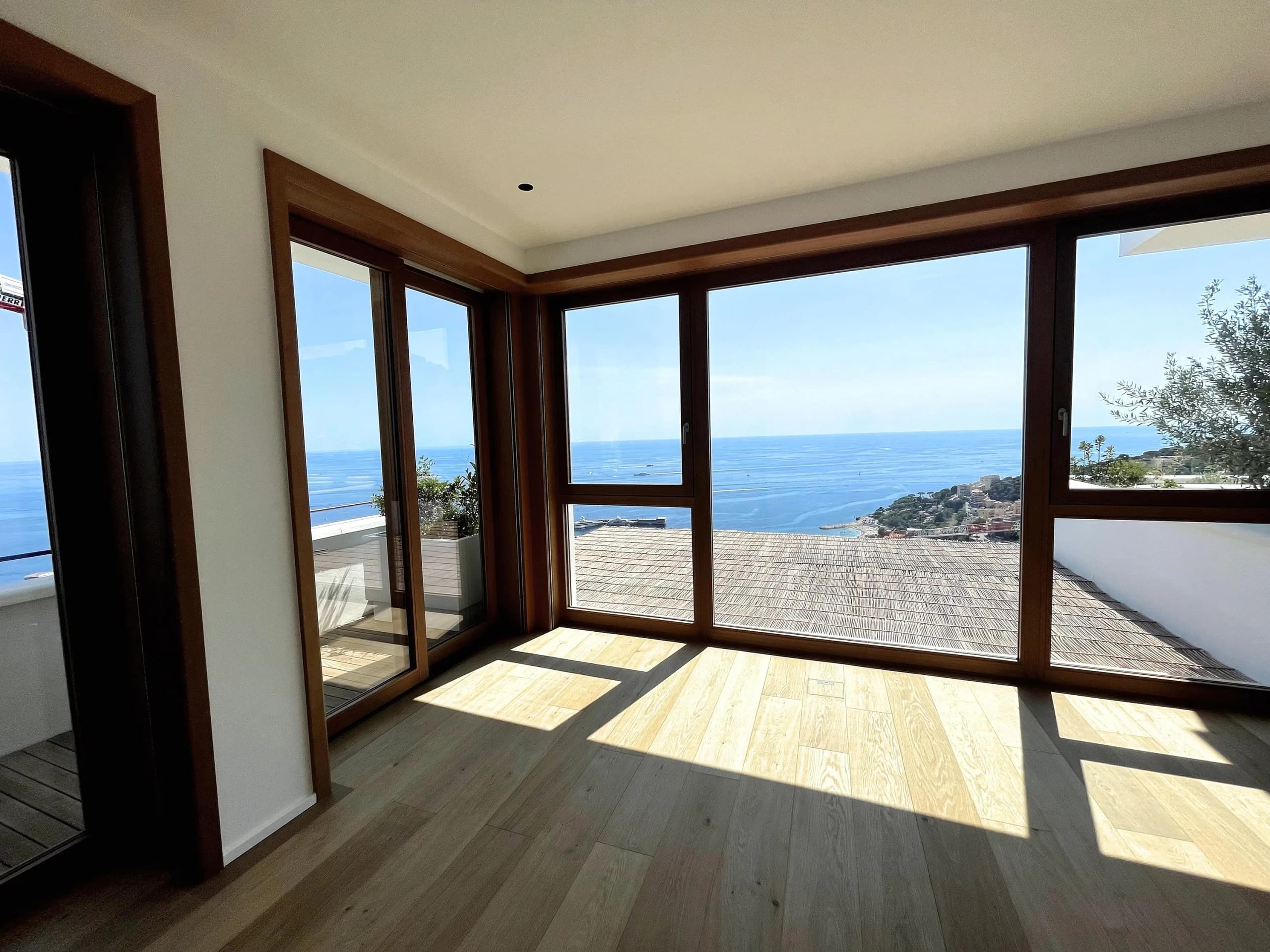
On a day and at an hour chosen for the light that flat actually gets, with the furniture moved if it needs moving. A lens that makes a room look twice its size sells nobody: the buyer who arrives disappointed does not make an offer, and does not come back.
A measured floor plan
The question that follows “how many bedrooms” is always how they sit together, and a plan answers in a glance what three paragraphs cannot. It also settles what the terrace really is before anybody stands on it.
Written three times, not translated once
English, French and Italian, each written to read as though it were the original. A buyer here is as likely to be Italian as English, and a description that reads as a translation reads as an agency that could not be bothered.
A brochure that cannot contradict the listing
The document we send and the paper handed over at a viewing come from the same record as the page on this site, so the price, the plan and the description cannot quietly drift apart between them.
And it reaches people before it reaches a website
The first place a new instruction goes is a short list of buyers already registered with us whose brief it answers, by name. Some are sold there and never appear publicly at all.
Visibility
Published, or never published at all
This is worth deciding deliberately rather than by default. Both routes are ordinary here, and neither is the discreet option we reserve for special clients.
Published
The property appears on this site in three languages, with its photographs, its plan and its brochure, and it is shown to anyone whose search it answers. It is the widest audience there is, and for most properties it is the right answer.
Off-market
Nothing appears anywhere: no listing on this site, no photograph in a window, no board. The property is described to a small number of buyers we already know, one conversation at a time, and the file never reaches the public side of our system at all.
And it is not a door that closes
A property can begin quietly and be published a month later if the quiet route has not found the buyer. The reverse is harder — what has been advertised has been seen — so if discretion matters, it matters at the start.
What off-market costs you is reach, and it is worth saying so plainly: fewer people will know the property exists. What it buys is that your neighbours, your staff and your tenant do not learn you are selling from a website.
Before a viewing
Who is brought to your door
A viewing costs you an afternoon and a tidy apartment, and it costs your neighbours a stranger in the lift. So who is worth an hour is settled before the appointment is made, not during it.
We know who they are
Every enquiry becomes a named record before it becomes an appointment: who they are, what they are looking for, what they have already seen and what they said about it. Nothing here depends on somebody remembering a telephone call.
We ask how it would be paid for
Early, and without apology. Funds ready now, or on the sale of something else, or subject to a lender — it changes what an offer is worth, and you are entitled to know it before the property comes off the market for someone.
If you are letting, we check eligibility first
A long-term letting in the protected sector under loi 1.235 is open only to tenants who qualify for it, and that is established before a viewing rather than after an application. On a sale it does not arise at all: anyone may buy in the protected sector.
Identity is checked, and the checking is recorded
Identity documents are part of a completed transaction here, on both sides of it. What we are given is encrypted where it is stored, and every time one of those documents is opened it is written to a log — a record that exists for the person who handed it over rather than for us.
And one of us goes with them
Every viewing is accompanied, keys stay with us, and you get what was said afterwards in writing — including when what was said was that the price is wrong.
Your side of it
What we will ask you for, and when
Not a great deal, and almost none of it at the start. It is set out here so that nothing arrives as a surprise in the week it becomes urgent.
At the valuation
An hour, and the awkward parts
Access to every room, including the ones you would rather not show, and whatever you know about the building: the works that have been voted, the dispute, the terrace that leaks in a storm. All of it surfaces during a sale — the only question is whether it surfaces from you or from the buyer.
When you instruct us
The paperwork the building generates
Your title, the service-charge statements, the syndic’s minutes, and any plan you already hold. We ask for what a buyer is going to ask for, and having it in a folder now is worth days at the far end.
Before the first viewing
A set of keys, and one free morning
The morning is for the photography, and it is the only appointment that has to happen at a particular hour. The keys stay with us, are never lent, and never leave with anybody who is viewing.
When an offer arrives
A decision, and the reasoning behind it
Yes, no, or the number at which it becomes yes. Buyers here take a no perfectly well; what they read as a signal is a week of silence, and they start looking elsewhere during it.
What we never ask you for is money. There is nothing to pay in advance, nothing for photography or advertising, and no fee of any kind if the property does not sell.
How long it takes
Two clocks, and only one of them is ours
We will not print an average, because the average of a market this small describes nobody’s apartment and would be quoted back at us for years. What we can set out is what the time is actually made of, and which parts of it you control.
The first clock: finding the buyer
The asking price controls this one almost entirely. A property priced correctly is seen in its first weeks by everybody who is in the market for it; one priced hopefully is seen by exactly the same people, who then wait. The calendar matters too — the year restarts in September and empties in August.
The second clock: getting to a signature
Once terms are agreed the pace belongs to the notary and to the paperwork rather than to us: the building’s documents, the checks, the funds arriving. Our part of it is chasing, and we do chase.
What lengthens it, every time
An owner who is several people rather than one; a charge still registered against the property; works voted but not yet carried out; a tenant in place; an estate not yet settled. None of these stops a sale, and every one of them is better found in the first week than in the last.
And what shortens it
Having the building’s paperwork ready before anyone asks for it, and an asking price you have already decided you would accept. That is the entire list, and both halves of it are yours.
If you want a figure for your own building rather than for the market, ask us: we will tell you what has recently changed hands in it, and how long each of those took.
The Monaco year, and its rhythm →
Fees
What it costs, and when it falls due
The tariff is set by the Chambre Immobilière Monégasque and is the same at every member agency, ours included — so the fee is not the thing you are choosing between. There is no separate marketing charge and nothing payable in advance.
- On a sale
- 5% from the seller · 3% from the buyer
- On a rental
- 10% from each party, on the annual rent
Fees fall due when the sale completes and are settled through the notary along with everything else. Anything payable beyond the tariff — and there is not normally anything — is put in writing before you agree to it. If nothing completes, there is no fee.
Start with what it is worth
An in-person valuation, and no obligation to instruct us afterwards. If you would rather not put anything in writing yet, telephone instead — a first conversation about selling does not have to start with a form.